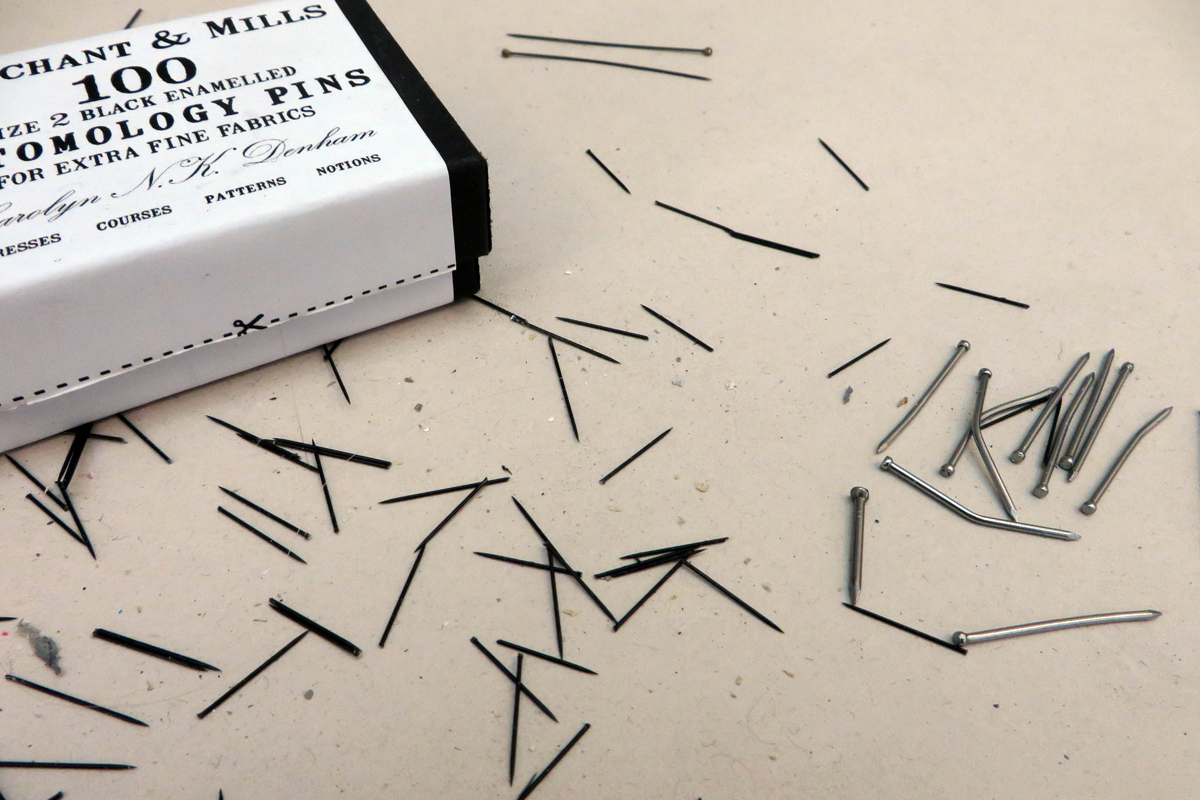
‘452/523 Collection’ is a new artwork developed especially for ‘Voices from the Roof of the World: Trees, Seeds, and Mountains’, an exhibition exploring the impact of climate change and the work of Aga Khan Agency for Habitat, Kew Garden Global Tree Seed Programme and One Resilient Earth.
A description of how the art work was created can be found below the images.
All images by Jo Hounsome photography.
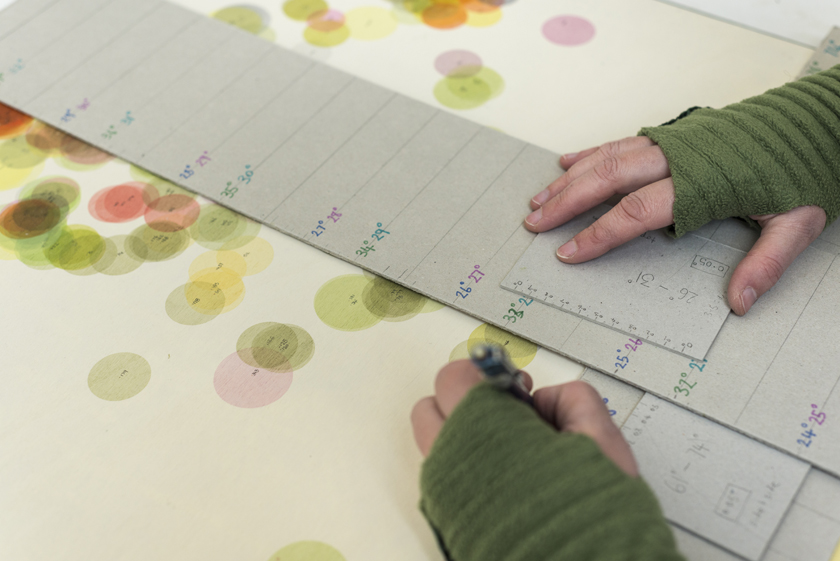
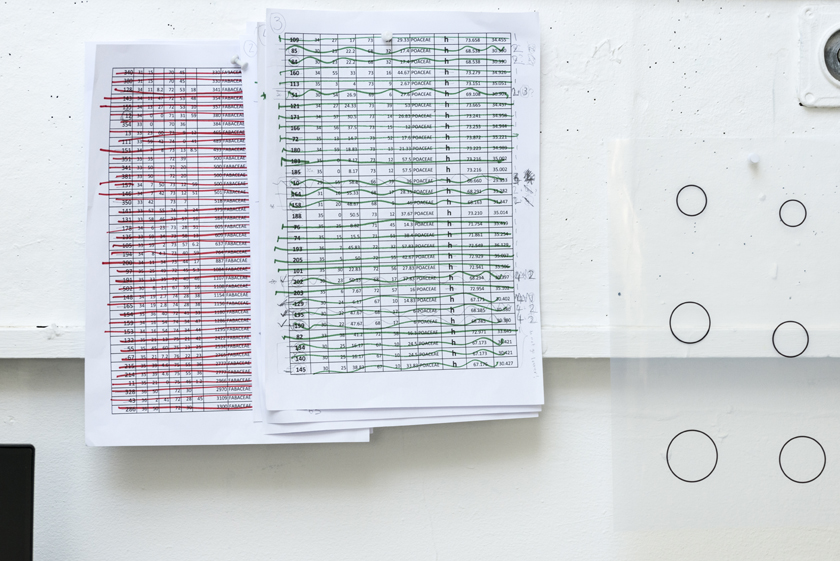
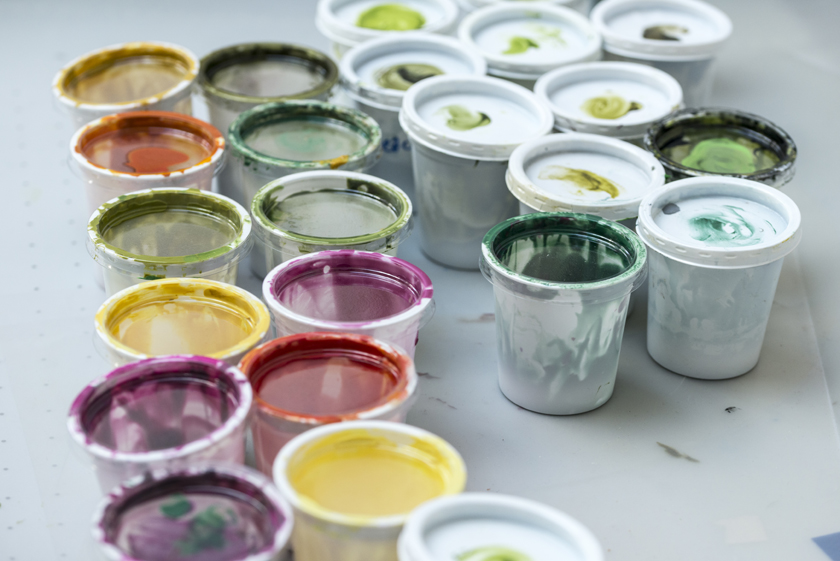
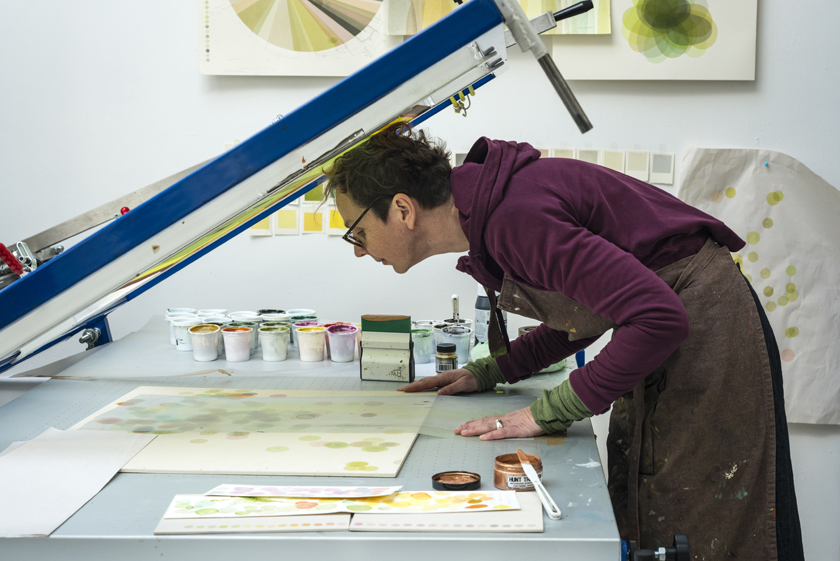


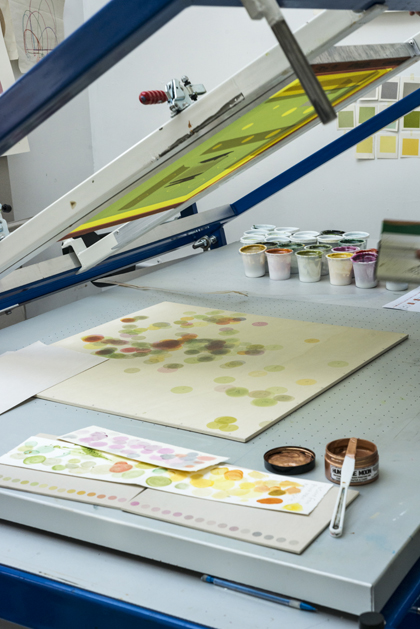
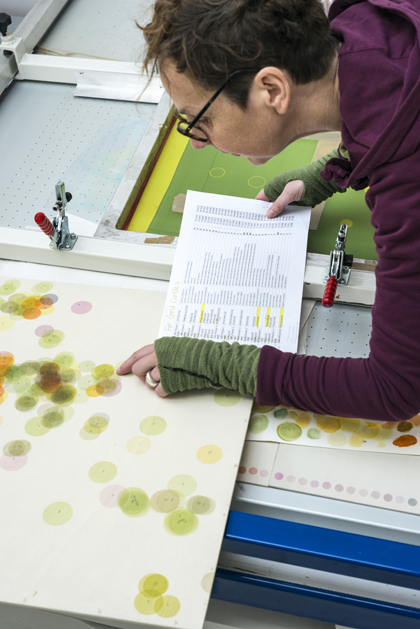
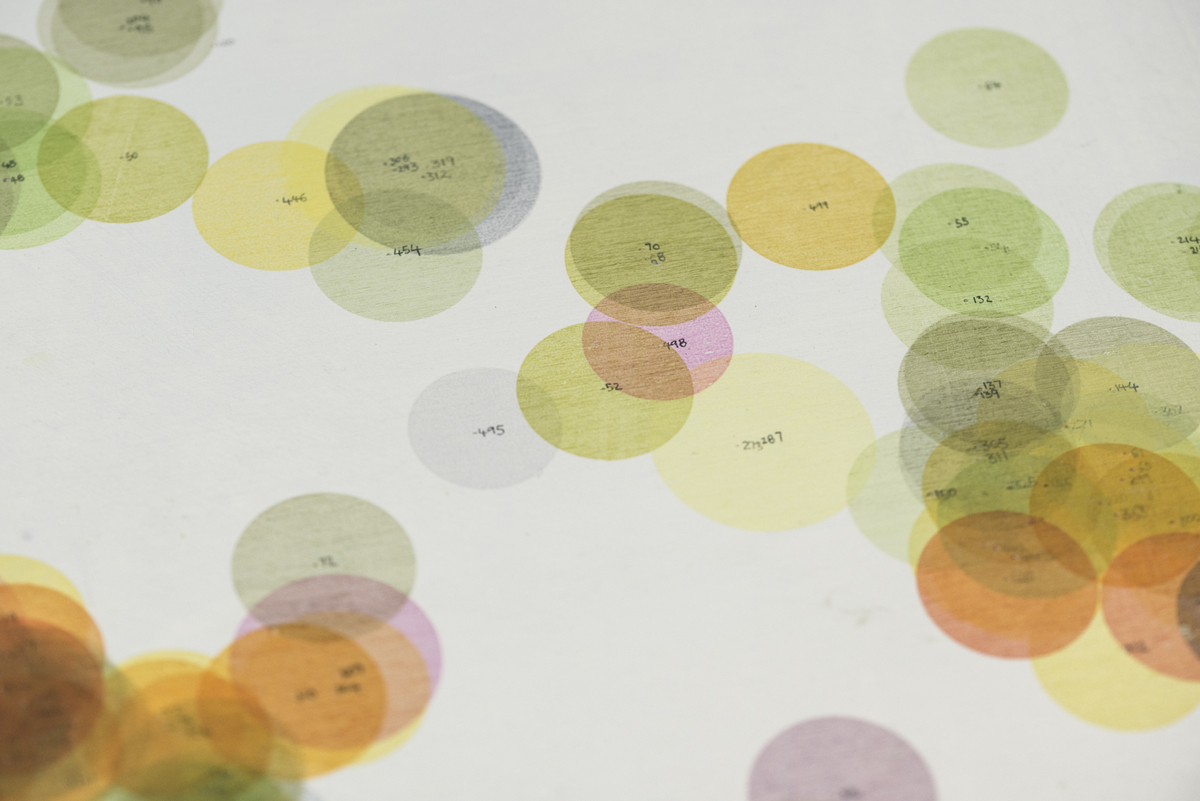
I was commissioned to create an artwork which would celebrate the abundant and diverse plant life found in Pakistan. As part of my initial research, the partners at the Kew Global Seed Bank sent me a spreadsheet containing the details of 514 of the plant species found in Pakistan which have already had their seeds collected and stored in their vault. This spreadsheet became the basis for my work.
Kew’s partners in Pakistan provided me with an additional list of 22 plants which they consider to be important species. Some are rare, some medicinally beneficial, some economically relevant, and most are under threat for at least one reason. 13 of these plants were already in the Kew database, but nine had to be added. Of the original 514 plants, 62 of these could not be plotted due to lack of location data. I was left with a total of 452 dots to plot and print.
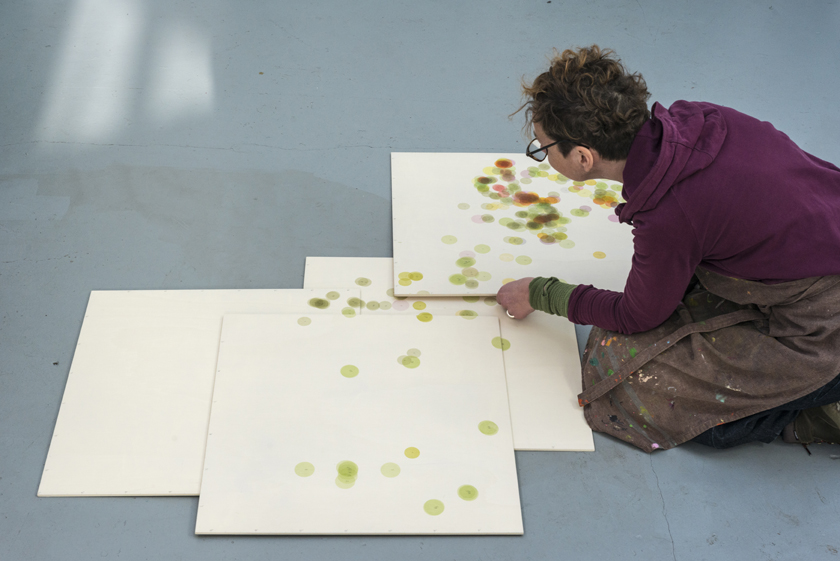
The artwork comprises four plywood boards, designed to be hung in such a way that the outline of Pakistan could, theoretically, be transposed onto the printed surfaces to create a map.
From the information recorded in the spreadsheets, I decided to focus on different family groups, and geographical location (Latitude and longitude) for each collected plant. Further research was needed to divide the data into groups of Trees, shrubs, herbaceous and non- herbaceous plants.
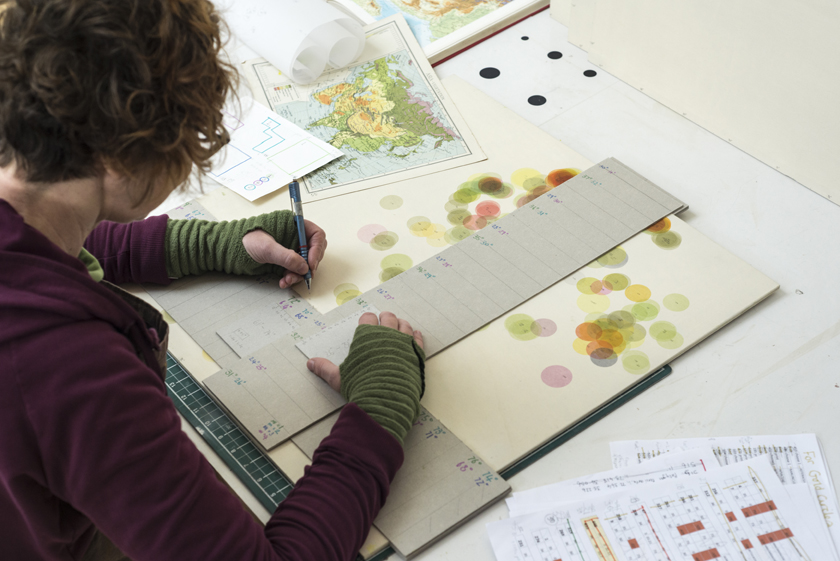
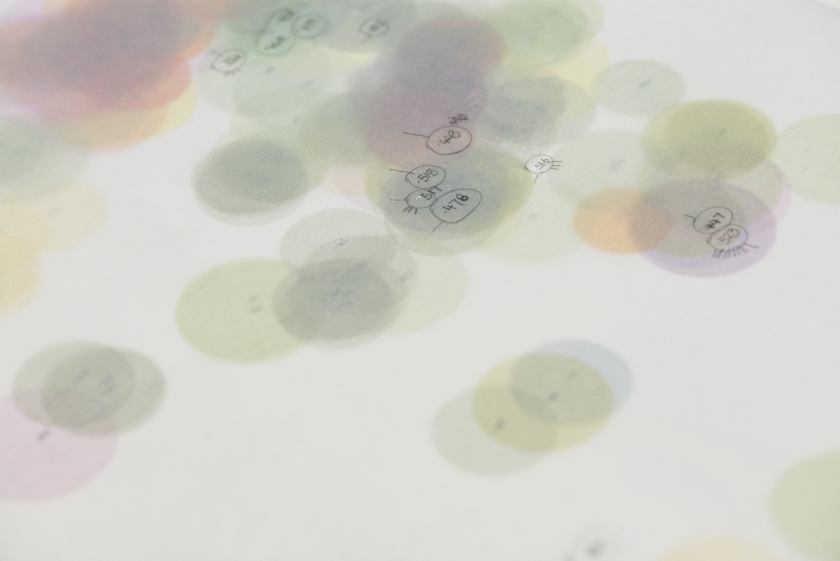
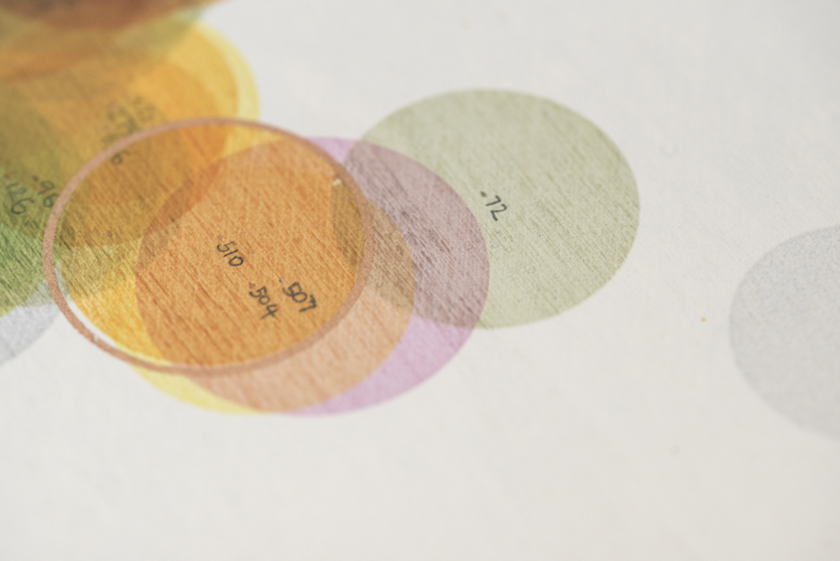
Few things make me happier than using found palettes in my work – in this case my colour scheme comes from a 1940’s Encyclopaedia page illustrating the general distribution of vegetation in Asia. I have given each plant family a different colour, broadly corresponding to the colour key from the vegetation map. I arranged the families in order of prevalence, from Poacea, with 129 dots, to Malvaceae with just one. The largest dots represent trees, the next size shrubs, then herbaceous plants and the smallest dots are non-herbaceous.
As I have Aphantasia (a ‘lack of a mind’s eye’), I frequently have no idea what a piece is going to look like when I start making it. This has never been more apparent than with this piece of work. As I was responding to the data, I didn’t know how the dots would be distributed until I plotted and printed each one. Each dot was painstakingly plotted to the correct latitude and longitude using carefully marked cardboard rulers, and then printed in the appropriate size and colour.
I lost count after 40 hours of printing. I am sure there are quicker and easier ways I could have worked, but none would have been so satisfying. I felt I was building a collection, taking care over each individual dot, giving it the attention it deserved.
It quickly became apparent that some areas of the ‘map’ would be densely layered with dots, whilst other areas are almost bare. The colours changed and morphed as I added the different families – the greens of Poaceae and Fabaceae being overlaid with the yellows of Ranunculaceae and purples of Pinaceae, creating dense patches where it was hard to distinguish the individual dots.
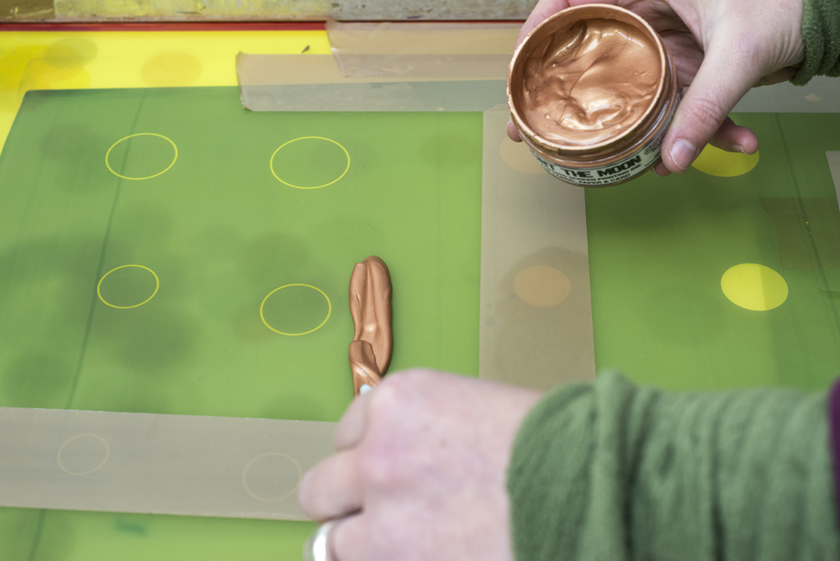
I finally added a golden halo to highlight each of the 22 important species, and now all that remains is to see if my complicated hanging method works!